Your first tackle in Fishing Planet
A plain-language guide to the rod, reel, line and bait you need for your first sessions, and how to put them together without overthinking it.
Start with what the game gives you
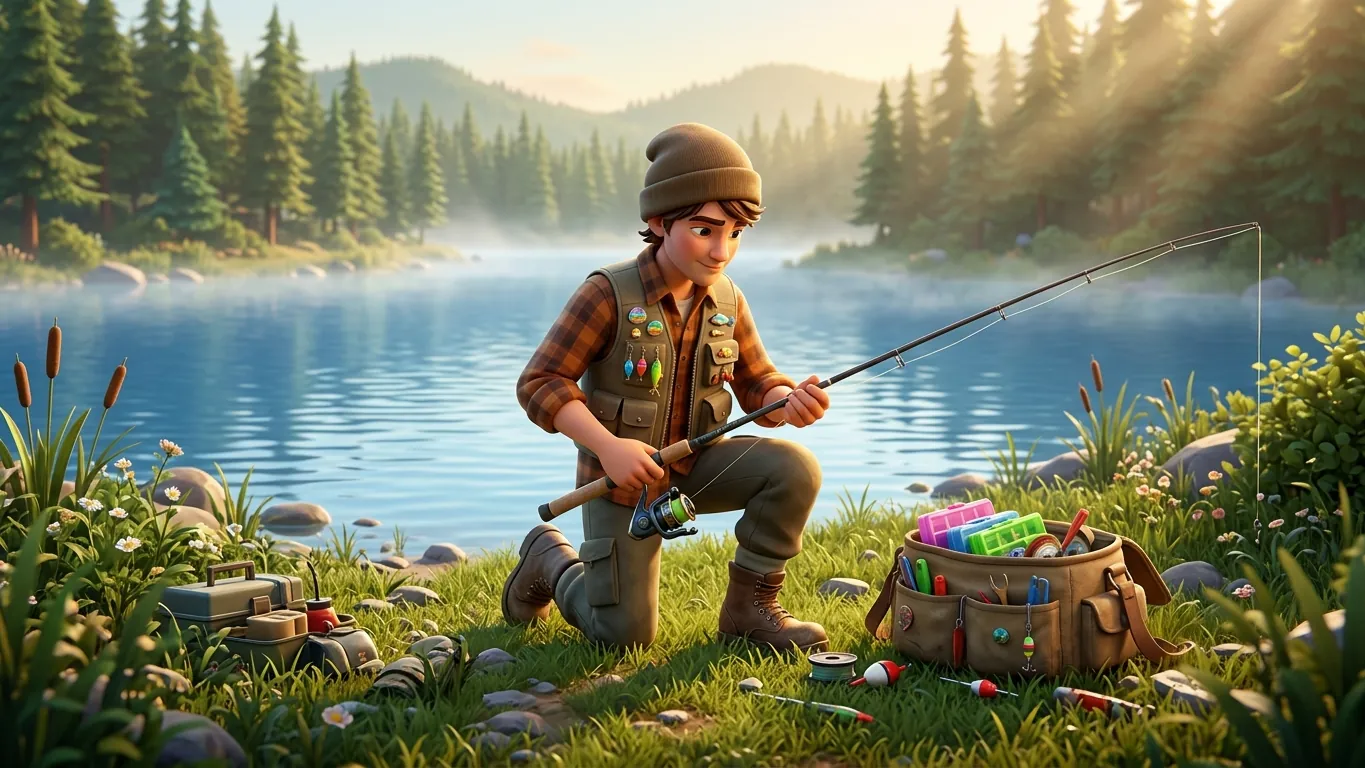
When you first enter Fishing Planet, you are not expected to buy a full arsenal. The game provides basic starter gear so you can get on the water quickly. Use it. Starter tackle is limited, but it suits the small and medium fish you will meet on early waters.
A complete setup has four parts: the rod, the reel, the line and the terminal tackle at the end of the line. Terminal tackle means everything that touches the water first, such as the hook, float, sinker or lure. If a part is missing, you cannot fish properly, so checking your setup before each session is a good first habit.
Before spending in-game currency, fish a few sessions with the basics. You will learn what you actually need much faster by using gear than by reading shop descriptions.
Rod types in plain words
Fishing Planet groups rods by fishing style. Each style suits a different situation.
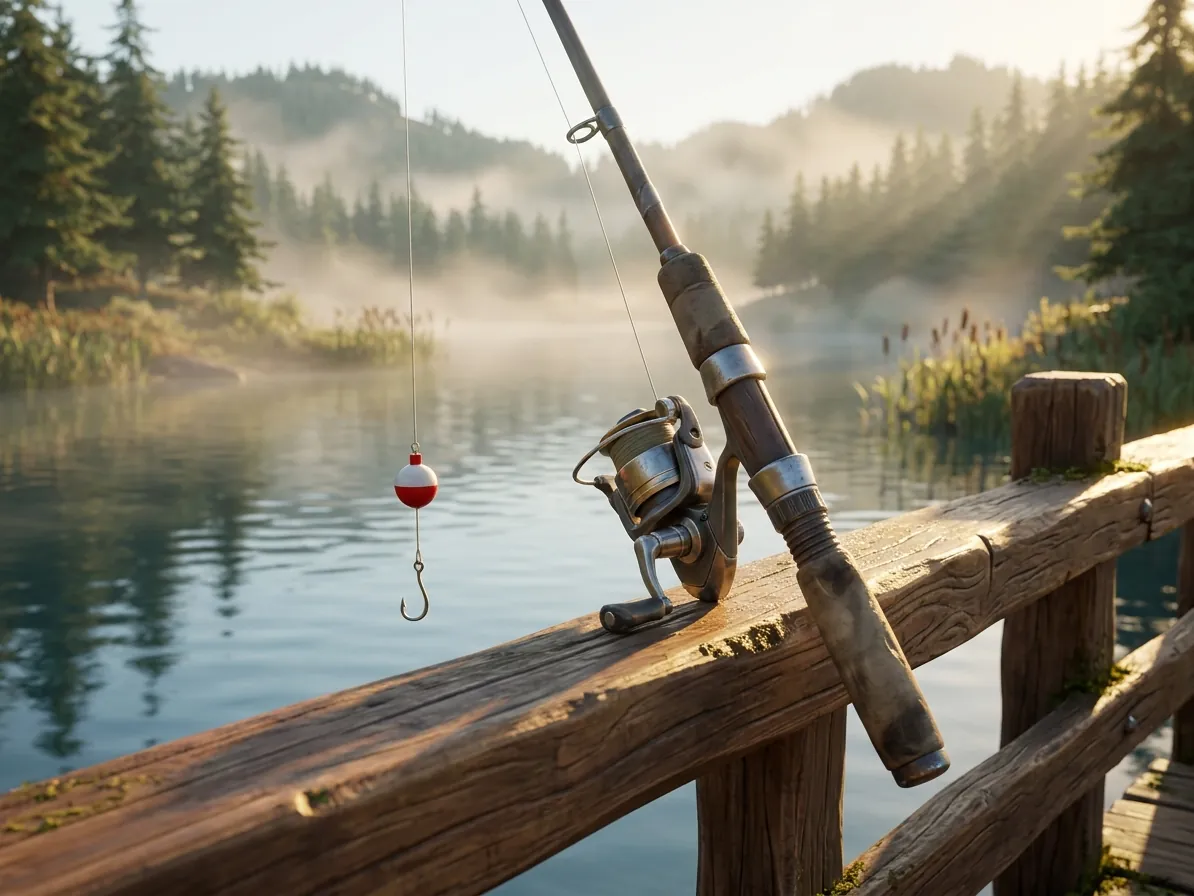
Float rods, such as telescopic and match rods, are used for float fishing. You cast a baited hook under a float and watch it for bites. This is the calmest way to start and the easiest to read.
Spinning rods are used with lures. You cast and reel back, and the movement of the lure attracts predatory fish. It is more active and teaches you about retrieve speed.
Bottom or feeder rods hold bait on the lakebed with a weight. You watch the rod tip for bites. This style suits fish that feed near the bottom.
For your first week, one float setup and one light spinning setup cover most early situations. Add a bottom rod once you feel comfortable with the other two.
Line strength and drag: the pair that saves fish
Every line has a strength rating, often called line test. It tells you roughly how much load the line can hold before it snaps. Rods and reels also have their own limits.
The drag is a setting on the reel that lets line slip out when a fish pulls hard. Think of it as a safety valve. If the drag is too tight, a strong run can break the line. If it is too loose, the fish keeps taking line and you struggle to bring it closer.
A practical rule for beginners: set the drag below the strength of your weakest component, then adjust during the fight. If the reel slips constantly on small fish, tighten it a little. If you lose fish to snapped line, loosen it.
Putting together a first float setup
Follow these steps for a simple, forgiving setup on calm early waters.
- 01
Choose a light float rod
Pick a float rod suited to small fish. Light gear makes bites easier to notice.
- 02
Add a reel and monofilament line
Monofilament stretches slightly, which helps absorb sudden pulls while you learn.
- 03
Attach a small hook and float
A small hook suits common baits like worms. The float holds the bait at a set depth.
- 04
Set the depth
Start with the bait slightly above the bottom. Adjust if you get no bites after a few casts.
- 05
Bait up and check the drag
Add your bait, set the drag below line strength and make a test cast near the shore.
Upgrade slowly and on purpose
It is tempting to buy the strongest rod available. Heavy gear is not always better. A stiff rod and thick line can make small fish harder to detect and can mean fewer bites in clear water.
Upgrade when you notice a specific limit. Maybe your line keeps breaking on larger fish, or you cannot cast far enough to reach a weed edge. Then buy the piece that solves that problem. Read the item description and compare strength ratings before buying.
Also look at line types. Monofilament is a good all-rounder. Fluorocarbon is less visible in water and often used as a leader. Braided line is thin and strong for its size, but it has little stretch, so drag settings matter more.
Game details can change with updates, so treat in-game descriptions as the final word on any item.
Related articles
 Learning to cast: power, aim and patience
Learn to cast in Fishing Planet: how to control power and direction, a short practice routine, and simple fixes for common beginner casting mistakes.
Read more
 Reading the water: where to make your first cast
How to choose a fishing spot in Fishing Planet: reading structure, judging depth, considering time of day and weather, and knowing when to move on.
Read more
 Your first catches: from bite to landing
A beginner's walkthrough of first catches in Fishing Planet: spotting bites, timing the strike, playing the fish, landing it and learning from losses.
Read more