Your first catches: from bite to landing
A calm walkthrough of the moments that decide a catch: spotting the bite, setting the hook, playing the fish and bringing it in.
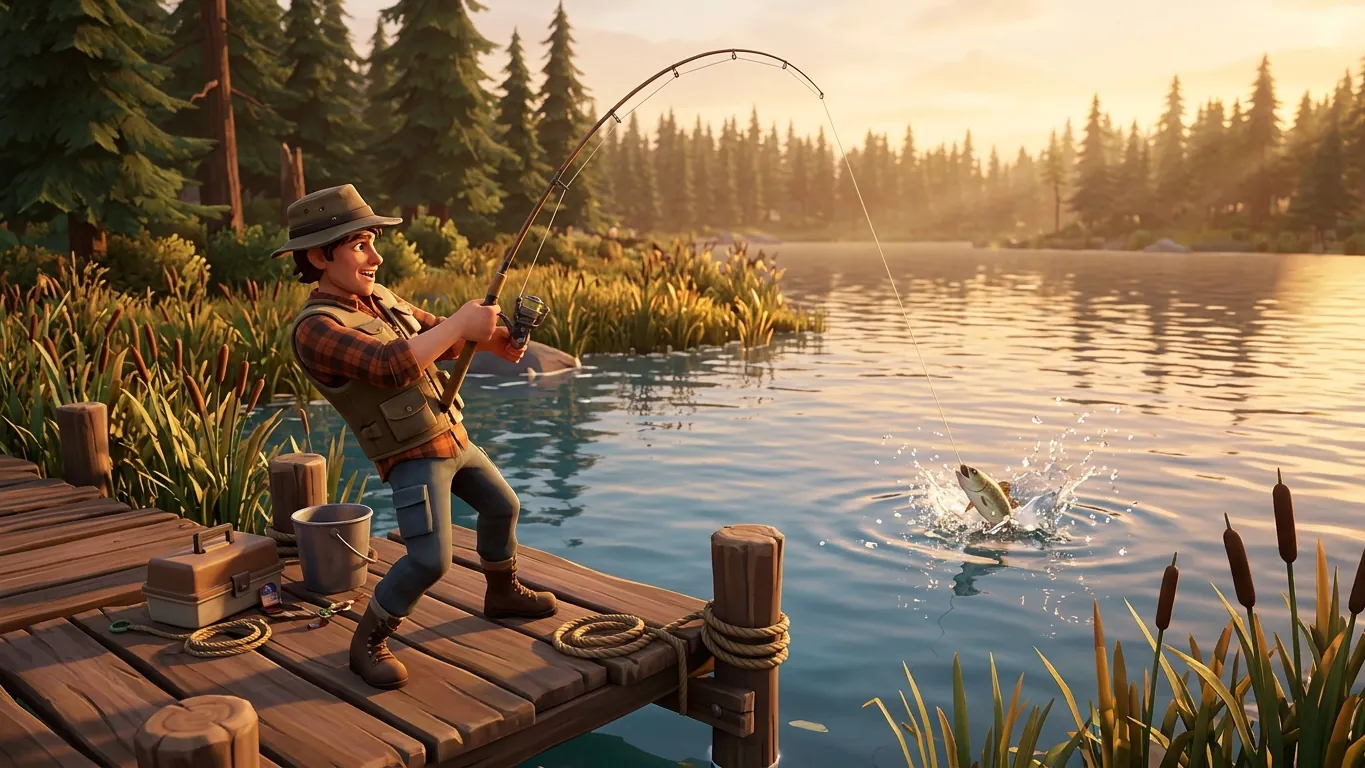
Recognising a bite
Every setup tells you about a bite in a different way. Learning these signals is the first step to landing fish.
With a float, watch for small dips, sideways movement or the float sliding under the surface. A gentle bob may be a fish testing the bait. A confident pull under is usually the moment to react.
With a bottom rod, watch the rod tip. Small taps followed by a steady bend often mean a fish has taken the bait.
With a lure, a bite often shows as a sudden change in tension or a stop in the retrieve. Fishing Planet also shows line tension and movement on screen, so keep an eye on those cues as well.
The strike: setting the hook at the right moment
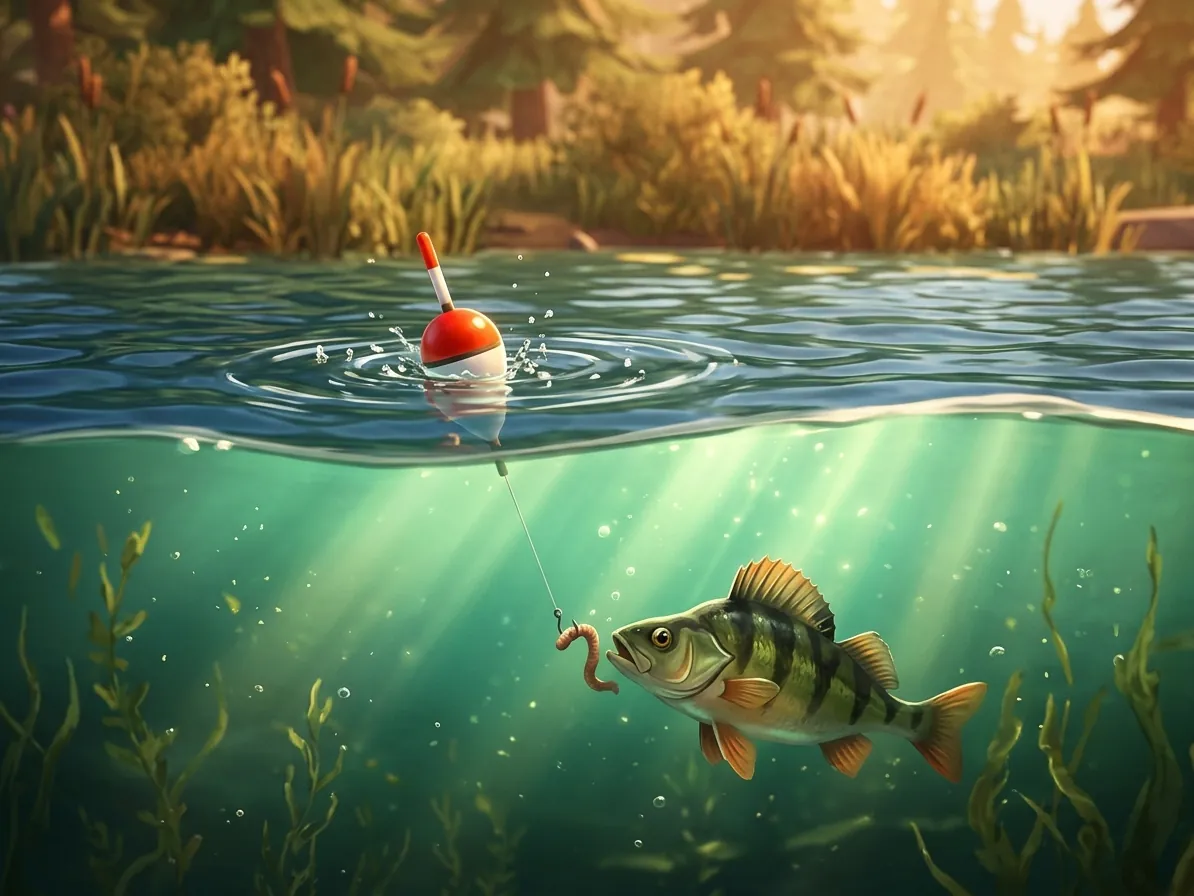
The strike is the action of moving the rod to set the hook in the fish's mouth. Timing is everything.
Strike too early, while the fish is only nibbling, and you pull the bait away. Strike too late, and the fish may drop the bait. With float fishing, a good habit is to wait until the float goes clearly under or moves away with purpose.
Predatory fish that hit a lure often grab it firmly, but a clear strike still helps. If many fish come off early in the fight, your strikes may be too soft or too late. Change one thing at a time and watch the results.
The fight: rod, reel and drag working together
Once the fish is hooked, the fight begins. Your goal is to tire the fish without breaking the line or pulling the hook out.
Keep the line tight. Slack line gives the fish a chance to shake the hook. Reel steadily when the fish swims toward you or rests.
When the fish makes a strong run, let the drag do its job. Line slipping from the reel is normal and protects your tackle. Reeling hard against a running fish puts maximum strain on the line.
Watch the tension cue. If it gets close to the limit, ease off and let the fish run a little. Where your setup allows, change the rod direction to steer the fish away from weeds and logs and into open water.
Small fish often come in quickly. Bigger ones can take several runs. Stay calm and repeat the cycle: let it run, then gain line when it rests.
Landing, keeping or releasing
When the fish is close and tired, bring it in. Smaller fish can usually be lifted out, while larger ones are easier to land with a landing net. Check your gear before a session so you know what you have.
After landing, you decide whether to keep or release the fish. In Fishing Planet, kept fish go into a keepnet or stringer, which has limited capacity. Read the rules for each location in the game, as they can affect what you may keep.
Releasing small fish is a good habit. It mirrors the catch-and-release approach many real anglers follow and keeps your keepnet space for the fish you want to record.
Learning from the fish that got away
Every lost fish is information. Ask a few simple questions.
Did the line break? Check your drag setting and line strength. Did the hook pull out? You may have struck late, let the line go slack or pulled too hard during a run. Did the fish reach weeds or a log? Next time, steer it toward open water earlier.
Keeping a short note after each lost fish helps. Over a few sessions, you will see whether most losses come from one cause.
No angler, virtual or real, lands every fish. The aim is to lose fewer as your understanding grows. Keep your first sessions relaxed, enjoy each small catch and adjust one thing at a time.
Related articles
 Fishing terms, explained through game moments
Drag, line test, leader, structure and more: common fishing terms explained through situations you will meet in Fishing Planet as a new player.
Read more
 Float fishing: the calm way to start
Float fishing basics for new virtual anglers: setting depth, choosing bait, reading float movement and small adjustments that help in Fishing Planet.
Read more
 Spinning and lures, explained for beginners
An introduction to spinning in Fishing Planet: common lure types, retrieve styles, choosing size, colour and depth, and handling snags as a beginner.
Read more