Reading the water: where to make your first cast
Fish gather where they find food and shelter. This article shows how to read a virtual lake, judge depth and decide when to stay or move.
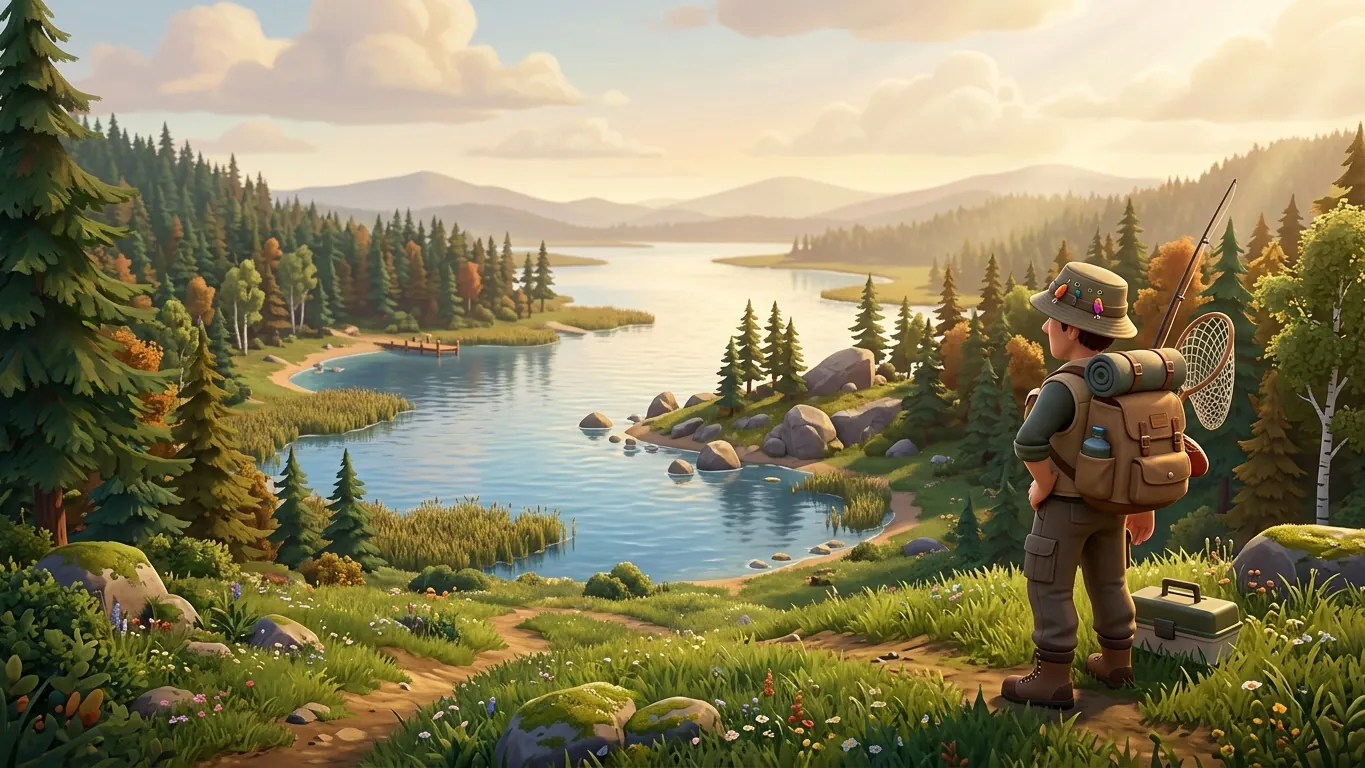
Fish gather where life is easier
In real lakes and in a well-made fishing simulator, fish are not spread evenly through the water. They gather where they find food, shelter and comfortable conditions. Fishing Planet reflects this idea, so spending a minute reading the water usually pays off more than casting at random.
When you arrive at a new location, walk the bank before you start. Look for anything that breaks up the open water: plants, rocks, fallen trees, shallow bays, points of land or a change in colour that hints at deeper water. Each of these features gives fish a reason to stay.
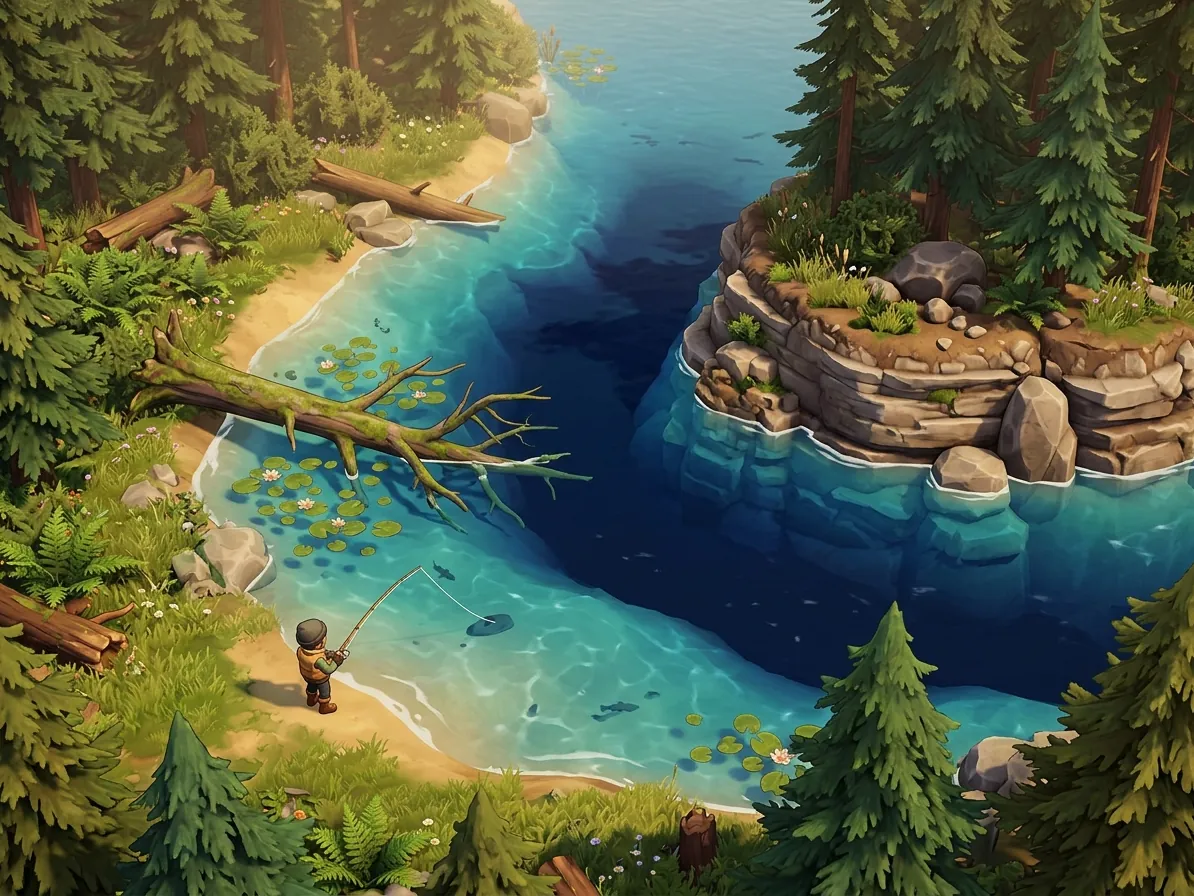
Structure explained with lake examples
Anglers use the word structure for physical features in or near the water. Cover is a related term for anything fish can hide in or under.
Weed beds and lily pads hide small fish and insects, which draw in predators. A fallen tree creates shade and ambush points. Rocky points and gravel bars break up the bottom and collect food. Docks offer shade on bright days.
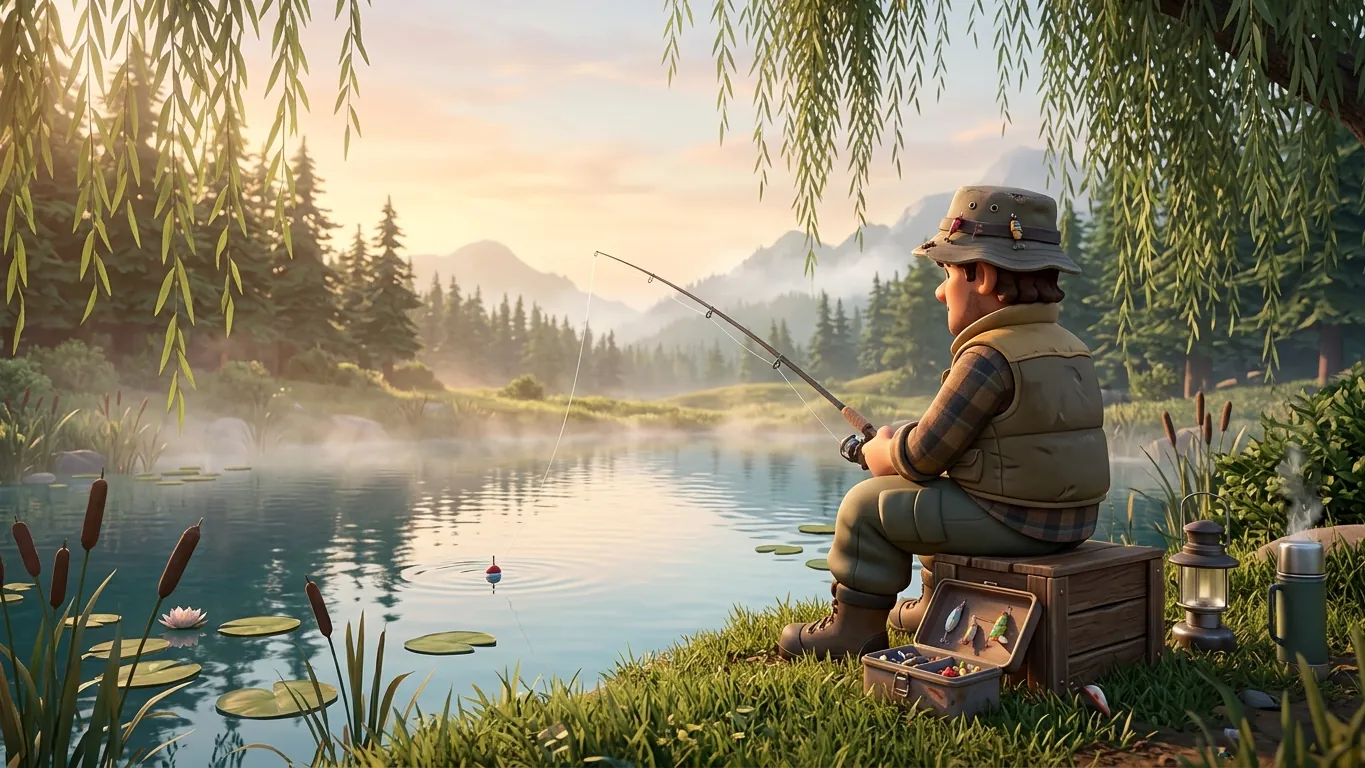
Picture a game situation. You see a line of lily pads along a shallow bay. Smaller fish may feed among the stems. A predator might wait at the outer edge where the pads meet deeper water. That edge is a strong first target for a lure or a float bait.
The same logic works almost everywhere. Find the edge between two types of water or cover, and start there.
Depth: the hidden part of choosing a spot
What you cannot see matters as much as what you can. Many species prefer a certain depth, and that preference can shift with temperature and time of day.
A drop-off is a place where shallow water quickly becomes deeper. Fish often patrol these edges because they can move between feeding in the shallows and resting in deeper water.
Float fishing gives you a simple way to measure depth. If the float lies flat instead of standing up, your bait or weight is probably resting on the bottom, which means the depth is set deeper than the water. Shorten it until the float stands, and you have a rough reading.
With sinking lures, counting the seconds until the lure reaches the bottom also gives a rough idea of depth. Try a few casts in different directions to find where the bottom drops away.
Time of day and weather
Fishing Planet models changing time of day and weather, and fish activity can change with them. Many anglers find early morning and evening productive for several species, while the middle of a bright day can be slower in shallow water.
Weather can shift things too. A change in conditions may move fish to different depths or make them more or less willing to chase a lure. Instead of memorising rules, keep notes. Write down the location, time, weather, depth and bait each time you catch something. Patterns appear faster than you might expect.
If the game's information about a species mentions preferred baits or habits, read it carefully. It is a direct hint about where and when to look.
Knowing when to move on
Staying in one spot for an hour without a bite is a common beginner habit. A simple rule helps: give a spot a fair chance, then move.
With float or bottom baits, wait a reasonable time after casting. If nothing happens, try a different depth or a different bait. If that also brings nothing, move to the next feature along the bank.
With lures, make several casts covering the area around a feature from different angles. If there is no response, change the lure or move on.
Moving is not giving up. It is how you find active fish. Over time you will build a mental map of each location and know where to start on your next visit.
Related articles
 Your first catches: from bite to landing
A beginner's walkthrough of first catches in Fishing Planet: spotting bites, timing the strike, playing the fish, landing it and learning from losses.
Read more
 Fishing terms, explained through game moments
Drag, line test, leader, structure and more: common fishing terms explained through situations you will meet in Fishing Planet as a new player.
Read more
 Float fishing: the calm way to start
Float fishing basics for new virtual anglers: setting depth, choosing bait, reading float movement and small adjustments that help in Fishing Planet.
Read more